
Booking wedding entertainment for a Chicago wedding sounds simple until you actually start doing it. Then you’re staring at a spreadsheet with twelve band quotes, three DJ contracts, and a cousin who swears his college roommate “does weddings on the side.” Here’s what actually matters, and what doesn’t.

Chicago’s wedding entertainment landscape: What you’re actually navigating
Chicago has one of the deepest wedding entertainment markets in the country. That’s the good news. The bad news is depth creates noise. You’ve got union bands that have played the Drake Hotel for thirty years, DJ collectives running out of a garage in Pilsen, and everything in between.
The city’s size works against couples in a specific way: too many options flatten into sameness after a few searches. Every website says “we’ll make your day unforgettable.” Every Instagram reel looks the same, some couple twirling under string lights while a saxophone player photobombs the shot. None of that tells you if the band can read a room of eighty-year-old grandparents and twenty-five-year-old groomsmen at the same time.
What actually separates Chicago’s entertainment options isn’t polish. It’s range. A band that only knows how to play a wedding reception in Lincoln Park will feel out of place at a South Side reception with a different crowd, different expectations, different energy. Ask about range before you ask about repertoire lists.
When to book: The timeline that changes everything
Most couples book their venue first, then panic-book entertainment second. That’s backwards, and it costs money.
The best Chicago bands and DJs get booked twelve to eighteen months out, especially for Saturdays between May and October. Wait until you’ve locked catering and florals, and you’re left choosing from whoever’s left, not whoever’s best.
Here’s the part nobody tells you: pricing isn’t fixed the way a venue’s is. A band’s rate for a random Tuesday in February looks nothing like their rate for a Saturday in September. If your date is flexible at all, ask about off-peak pricing before you commit to a Saturday just because that’s “when weddings happen.”
And if you’re getting married during peak season (June through October, basically), start calling entertainment vendors the same week you sign your venue contract. Not after. The same week.
The Chicago wedding entertainment decision- DJ, band or something else
This is the question every couple fights about at least once. Neither choice is wrong, but they solve different problems.
A live band brings energy a DJ can’t fake. There’s something about seeing musicians actually play that changes how a room moves. But bands come with limitations: song selection is finite, breaks are mandatory, and a five-piece band can’t replicate a Beyoncé track note for note.
A DJ gives you control. Every song ever recorded is available, transitions are seamless, and there’s no setup between courses and dancing. What you lose is the visual energy of live performance. A DJ booth, even a great one, doesn’t have the same pull as five musicians locked into a groove.
The “something else” category is growing fast in Chicago: hybrid setups pairing a DJ with a saxophonist or percussionist, silent disco add-ons for late-night crowds, even live painters working the reception. These aren’t gimmicks when done right. They’re ways to solve a specific problem, like keeping energy up during a long cocktail hour, without committing to a full band budget.
Pick based on your actual guest list, not what looked good on Pinterest. A room full of dancers wants a band. A room full of people who came for the open bar and good conversation might be better served by a DJ who knows when to hold back.
What to look for when evaluating bands
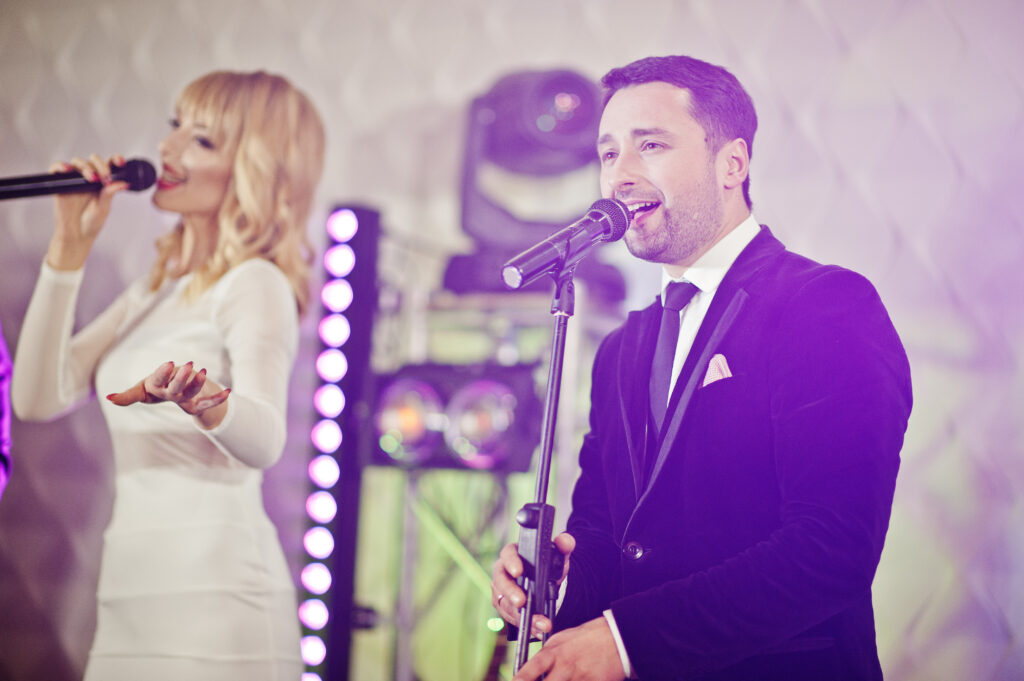
Most couples evaluate bands by demo video alone. That’s a mistake. Demo videos are edited highlight reels, recorded on their best night, in their best room, with their most engaged crowd. Every band looks good in a demo.
What you actually need to know: can they read a room live? Ask for a reference from a wedding within the last six months, not a curated testimonial from their website. Call that couple. Ask them one question: did the dance floor stay full?
Check the actual lineup you’ll be getting. Some Chicago bands book under one name but rotate musicians depending on availability. That’s common practice, and it’s not automatically bad, but you deserve to know if the singer in the demo video is the singer at your wedding.
Ask how many songs they know outside their standard set list. A band that can only play their rehearsed forty songs is a band that can’t handle a request from your grandfather for one specific song that means something to him. Flexibility matters more than polish.
And watch how they talk about logistics. A band that asks detailed questions about your timeline, your venue’s sound restrictions, and your family dynamics is a band that’s done this enough times to know what goes wrong. A band that just says “don’t worry, we’ve got this” without asking anything is a band you should worry about.
Working with a wedding entertainment buyer – why it changes the experience
Most couples don’t know entertainment buyers exist as a category, separate from agencies that just sell you whatever’s on their roster. A buyer works differently: they represent your interests, not a specific band’s calendar.
The distinction matters more than it sounds like it should. An agency with fifteen bands under contract has an incentive to book whichever band is available on your date, even if that band isn’t the best fit for your specific reception. A buyer’s job is matching, not filling slots.
This matters most for anything unusual: a multicultural wedding needing entertainment fluent in two or three different musical traditions, a smaller venue with strict sound limits, a guest list split between very different age groups and tastes. A buyer who’s built relationships across Chicago’s entertainment scene for years, not months, knows who can actually deliver on a hard brief, not just who’s free that weekend.
If you’re working with someone in this role, ask directly: are you paid by the band, or by me? The answer tells you who they’re actually working for.
The wedding entertainment contract: What Chicago couples need to know
This is the section couples skip, and it’s the one that causes the most stress on the actual wedding day.
Read the cancellation and rescheduling terms first. Chicago weather is unpredictable enough that outdoor receptions need a documented backup plan, not a verbal promise. If the contract doesn’t specify what happens in a rainout, that’s a gap you need filled before you sign.
Check the overtime clause. Bands and DJs almost always charge for time beyond the contracted hours, and those rates vary wildly, from reasonable to punishing. Know the number before your reception runs long, not during it, when you’re not exactly in a position to negotiate.
Confirm what’s included in the base price versus what’s an add-on. Ceremony music, cocktail hour coverage, MC services for announcements: some vendors bundle these in, others itemize every piece separately. A quote that looks cheaper on paper can end up more expensive once you add back what got stripped out.
And get equipment specifics in writing: sound system capacity for your venue’s size, lighting included versus lighting as an upsell, and who handles setup and breakdown timing with your venue coordinator. Vague contract language here turns into a wedding-day scramble.
Conclusion
Chicago’s wedding entertainment market rewards couples who do the homework and punishes the ones who don’t. The good vendors are genuinely good, some of the best in the country. But finding them takes more than scrolling Instagram and picking whoever posts the most.
Book early. Ask harder questions than the marketing copy answers. Read the contract like it’s going to matter, because it will. Do that, and the entertainment becomes the thing people talk about after the wedding, for the right reasons.